


Making New Hire Onboarding Stick: 17 Tips from People Leaders
New hire onboarding often falls short because companies treat it as a checklist rather than a strategic process that shapes long-term performance. This article draws on insights from experienced hiring managers and HR professionals who have refined onboarding into a repeatable system that builds confidence, clarity, and connection from day one. The following seventeen strategies provide practical methods to transform onboarding from a generic orientation into an experience that accelerates contribution and retention.
- Close Week One with Questions
- Create a First-Week Win
- Define Success and Ownership Clearly
- Start Pre-Hire
- Deliver a Debut Team Presentation
- Kick Off with Expectations
- Invite an Early Insight
- Run a Manager Alignment Talk
- Connect Work to Purpose
- Match Support to Style
- Lead with the Why
- Shadow a Real Conversation
- Host a Contextual Coffee Chat
- Pair a Buddy on Day One
- Partner on the Initial Job
- Assign a Scoped Pilot
- Hand Over a Launch Roadmap
Close Week One with Questions
We keep onboarding tight — five days of structured activity, then a guided 30-day ramp. The first week isn’t about drowning people in policies and handbooks. It’s about making them feel like they belong here and giving them one small win before Friday.
Day one is all relationship-building. New hires meet their assigned buddy (a peer, not their manager), get a walkthrough of how we actually communicate day-to-day, and sit in on a real client call or project review. No shadowing from the sidelines — they’re in the room, introduced by name, treated like part of the team from hour one.
By day three, they’re doing real work. Not busywork or fake training exercises. We give them a small, completable task that mirrors what they’ll do regularly — for us, that might be drafting a single resume section or handling a client intake form. They get feedback the same day. That quick loop of doing something real and hearing “here’s what worked, here’s what to adjust” builds confidence faster than any orientation slideshow.
The one onboarding moment that consistently sets people up for success? The end-of-week-one check-in. Not a formal review — a 20-minute conversation where their manager asks three questions: What surprised you? What’s still confusing? What do you need from us that you haven’t gotten yet? It sounds simple, but it catches misalignments early. New hires who feel heard in that first week stick around longer and hit their stride weeks ahead of those who don’t get that space to speak up.

Create a First-Week Win
Most onboarding programs fail for the same reason: they confuse orientation with integration. A new hire can sit through three days of presentations, sign every policy document, and tour every floor, and still feel like a stranger on day ten. Connection and productivity don’t come from information dumps. They come from structure that treats the first few weeks as a deliberate transition, not an administrative checklist.
The framework that works is simple. Break onboarding into three phases: belong, contribute, own.
In the first few days, the goal is belonging. That means a warm preboarding touchpoint before day one, a buddy assigned from outside the new hire’s direct team, and a manager conversation that’s entirely about context, not tasks. Who are the people you’ll depend on? How does work actually move here? What’s the unwritten stuff nobody puts in the handbook? When someone understands how the organization really operates, not just what it says on the intranet, they stop feeling like a guest.
In weeks two and three, the focus shifts to contribution. This is where the single most powerful onboarding moment lives: the first-week win. Before the new hire starts, the manager identifies one small, real, meaningful task they can complete and ship within their first five to seven days. Not a training exercise. Not a hypothetical. Something that touches actual work, gets seen by the team, and produces a visible result. It could be fixing a minor process gap, drafting a client-facing document, improving a dashboard, or closing a small ticket that’s been sitting in a queue. The point is that the new person contributes something tangible before they’ve even finished setting up their desk.
This matters more than any welcome lunch or swag bag because it answers the one question every new hire is silently asking: do I belong here, and can I actually do this? When someone ships something real in their first week, confidence locks in. Their teammates see them as a contributor, not a trainee. The relationship shifts from “the new person” to “a colleague” almost overnight. Research consistently shows that effective onboarding boosts new-hire retention by as much as 82 percent. But the number that matters most is how fast someone feels like they’re adding value, because that feeling is what makes them stay.

Define Success and Ownership Clearly
In a chemical manufacturing environment, onboarding is not a “nice to have” — it is a business-critical system. You have to build connection and competence simultaneously, and you have to do it quickly. If you miss either, you risk safety, performance, or retention.
We design onboarding around a simple principle: clarity creates confidence, and confidence drives performance.
We start with safety, but we are intentional about how we deliver it. We connect safety to real outcomes — protecting themselves, protecting their teammates, and ensuring the integrity of our operation. When safety is framed as a shared responsibility rather than a checklist, it builds trust from the very beginning.
From there, we make the path to competence highly visible. We use a role-based training matrix that clearly outlines what skills need to be learned, in what sequence, and how proficiency is measured. That visibility reduces anxiety and creates early momentum because people can see themselves progressing.
We also believe strongly in side-by-side training. Every new hire works shoulder-to-shoulder with an experienced operator, learning in real time and in real conditions. This approach accelerates skill development, but just as importantly, it builds an immediate human connection.
Connection itself is something we design intentionally. I personally greet every new hire on their first day because it matters that they feel seen and welcomed. We bring the team together early, often over a simple lunch, and we make it explicit who they can go to for help, questions, or concerns.
We are equally clear about how we work. Culture is not something we assume people will absorb; it is something we teach. We define how we communicate across shifts, how issues are escalated, and what accountability looks like in practice.
Importantly, onboarding does not end after initial training. We anchor the experience with structured 30, 60, and 90-day check-ins, where we focus on skill progression, confidence, and any friction points they may be experiencing. This is where retention is often won or lost, and it is where we stay closely engaged.
If I had to isolate one moment that consistently sets people up for success, it is this: the moment a new hire is told, clearly and directly, what success looks like and exactly who will help them get there.
You know you have succeeded when a new hire can confidently say, “I know how to be safe, I know how to do my job, and I know who has my back.”

Start Pre-Hire
Most companies start onboarding after they hire someone. We start it during the hiring process.
We place executive assistants with CEOs and founders, so the stakes are high from day one. If an EA fumbles the first week with a client, that’s not just a bad impression — it’s a broken trust that’s almost impossible to fix. So we prepare everything.
Our hiring process runs ~30 days. Six stages, dozens of demo tasks, reference calls, personality tests. The onboarding moment that actually matters most happens right here before anyone gets hired. Candidates work through real-world scenarios, tricky tasks, things where there’s no clear instruction manual. Like when you work with people.
The ones who impress us during this phase are the ones who succeed with clients later. In 98%. We’ve never had someone crush the hiring process and then fail with a client. Life sometimes happens and collaboration doesn’t work out, but that’s not because of bad HR process or something.
Once they’re actually in, new EAs don’t touch a client for the first ~15 days. They spend 2-3 weeks studying, reading, working through demo tasks and real example scenarios. They meet our account managers, quality managers, IT team, head of HR is constantly there for them. Since we match them with a client, they’ve already done deep research on that person’s business, competitors, industry.
So when they show up to their first interaction with a client, they’re not introducing themselves and asking basic questions. They’re already contributing. That first moment where a founder goes, “Wait, you already know this about my business?” — that’s when the relationship locks in.
The mistake most companies make with onboarding is treating it like orientation. We treat it like preparation for a performance. By the time show starts our people have rehearsed enough that it looks effortless.

Deliver a Debut Team Presentation
We pair every new hire with a mentor on day one, but week two is when things get real. They present their first audit or campaign analysis to the team. From what I’ve seen, new hires who get actual client work early tend to stick around longer and ramp up faster.
The presentation doesn’t need to be polished. The point is showing them that their perspective counts from the start. We give them real accounts to dig into, not made-up practice exercises. Veterans remember what their first presentation felt like, so they’re usually pretty supportive. The responsibility helps people find their footing fast, and it also gives me a sense of who might move into leadership roles down the line. By week three, they’re actually contributing instead of just sitting in on meetings.

Kick Off with Expectations
I’ve learned that new hires feel connected fastest when their first 90 days are treated like a clear “season,” not a blur of random meetings. I give each person a simple 30-60-90 day plan, a named buddy, and a couple of early wins they can truly own so they feel useful, not in the way. The moment that consistently sets them up for success is a focused kickoff on day one with me or their manager and their buddy, where we talk through expectations, how we work, and how to ask for help without feeling awkward.

Invite an Early Insight
Oboarding is designed around two goals that must happen at the same time. New hires should understand how to contribute quickly while also feeling genuinely connected to the team and the mission.
Many onboarding programs focus heavily on information. Policies, documentation, and training materials are necessary, but they do not automatically create engagement. The more effective approach is to combine clarity about the role with early human connection.
One practice that consistently makes a difference is giving new hires meaningful context about how their work fits into the larger organization. Early conversations focus on the problems the company is solving, how different teams collaborate, and why the role they joined plays an important part in that journey. When people understand the purpose behind their work, productivity tends to follow naturally.
Another important moment is introducing new hires to cross functional colleagues in a relaxed setting where the goal is simply to exchange perspectives rather than complete a task. These conversations help newcomers build relationships early and make it easier to ask questions later.
The onboarding moment that often sets people up for success is the first opportunity to contribute a real idea or insight. Even a small contribution early on signals that their thinking is valued. It shifts the experience from observing the organization to actively participating in it.
When onboarding creates both clarity and connection, new hires move from learning about the company to feeling like a meaningful part of it much faster.

Run a Manager Alignment Talk
We focus on three areas during onboarding: understanding the role, early contributions, and team connections. We also make sure new hires get a clear 30-60-90 day plan, including the outcomes, projects, and people they’ll be working with. This helps them understand how their contributions impact the larger goals of the company from day one.
One onboarding experience that has always helped new hires succeed is having a structured “first week alignment conversation” with their manager. This conversation ensures the new hire has a clear understanding of how decisions are made, how feedback is provided, and where to focus their energy to be successful in the first three months. This conversation also provides a sense of psychological safety for the new hire.

Connect Work to Purpose
I’ve found that most companies rush through onboarding with a basic checklist, but I take a different approach. Instead of pushing for quick wins, I focus first on helping new hires sync with our company’s natural rhythm. This foundation helps them connect deeply with our purpose and consistently delivers better results.
My years of building teams have taught me that context is crucial. When I bring someone new on board, I go beyond just explaining what to do. I show them why their role matters and how their work impacts the whole system. Back when I led teams at VisibilityStack, I made sure every new hire saw exactly how their role connected to our product cycle and business model.
I’ve watched too many companies rush people into their jobs without showing them the full picture. My experience proves that when new hires understand how their work ties to company goals, they contribute more meaningfully. This clarity naturally boosts collaboration and drives innovation.
A well-crafted onboarding process transforms newcomers into valuable team members who grasp both their immediate responsibilities and their broader impact. When people clearly see their purpose and feel connected to the mission, real productivity follows.

Match Support to Style
Heuristics are really tempting when it comes to onboarding. A standardized process is streamlined and easy, and HR is very busy, so having that base can feel important.
But personally, I’ve found that standardization has some negatives too. Even in similar specializations, employees come with very different backgrounds and working styles, so one approach only goes so far.
As we try to shape onboarding around the individual instead. Some new hires come to us with years of recruiting experience, while others are still building those skills. Some like to learn by jumping straight into the work, while others prefer more context and structure at the beginning. Paying attention to those differences helps people settle in more naturally.
One moment that consistently sets people up for success is an early conversation about how they like to work and what kind of support helps them do their best. It’s a simple discussion, but it makes a real difference. From there we can adjust how we coach, how often we check in, and how quickly we introduce new responsibilities.
When people feel like their onboarding reflects who they are and how they operate, they tend to connect with the team faster and gain confidence more quickly. It signals from the start that they’re not just being slotted into a process, but rather, joining a team that cares.

Lead with the Why
The one thing that changed everything for us was frontloading the “why” before the “how.” When we onboard new clinicians into our telehealth network, we don’t start with logins and compliance docs. We start with a live walkthrough of who we serve, why we built this practice the way we did, and what kind of experience we want every client to have. That context-setting conversation does more in 30 minutes than a week of self-paced training modules ever could. People don’t feel connected to a company because they completed an onboarding checklist. They feel connected because they understand the mission and can see where they fit inside of it. Once that’s in place, the technical stuff clicks faster because they already know what they’re building toward.

Shadow a Real Conversation
The single onboarding moment that consistently sets people up for success is what we call the first-week client shadow. On day three, before the new hire has finished reading documentation or completing any training modules, we put them on a real client call as a silent observer with a senior team member.
This works because it does two things simultaneously. First, it shows them exactly what good looks like in our context, not theoretical training materials but an actual conversation with a real client and real stakes. Second, and this is the part most companies miss, it gives them something specific to talk about with their new colleagues. After the call, their assigned buddy debriefs with them over coffee and suddenly they have shared context. They are not just the new person anymore, they have opinions about a project.
We structure the broader onboarding around a simple 30-60-90 framework. By day 30 they should understand our processes. By day 60 they should be delivering work with minimal oversight. By day 90 they should be suggesting improvements to how we do things. But that first client shadow on day three is what accelerates everything because it gives them context that no onboarding document can replicate.

Host a Contextual Coffee Chat
To ensure new hires feel connected and productive, we utilize a “30-60-90 Day Success Map” that pairs every functional milestone with a specific social touchpoint. By day three, new team members are assigned a “low-stakes” contribution task — such as auditing a single product page or updating a guide—to provide an immediate sense of agency and tangible impact.
One onboarding moment that consistently sets newcomers up for success is the “Contextual Coffee Chat” held in the first week. Rather than a generic meet-and-greet, the new hire is tasked with asking three specific veterans how their individual role directly supports the company’s current primary objective. This removes the guesswork regarding how their work fits into the larger machine and builds immediate cross-departmental rapport.

Pair a Buddy on Day One
I structure onboarding around a simple rule that new hires should understand the facility’s policies and procedures, expectations, department standards, and compliance requirements to ensure success within the first 90 days. The new hire orientation is designed to accelerate performance by ensuring faster productivity, improved consistency, reduced errors, increased communication, efficiency, higher retention, and improved outcomes. The element that consistently sets newcomers up for success is pairing the new hire with a buddy on day one. During this meeting, the buddy answers three questions that help alleviate stress and provide deeper insight into operations: what I wish I had known the first week, what success looks like, and a contact number to text with questions or concerns at any time. This combination helps people feel connected and sets them up for success within the first 90 days.

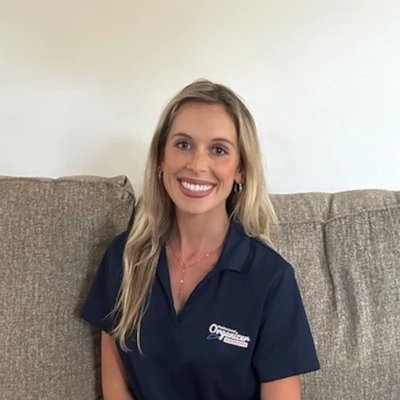
Partner on the Initial Job
One way I structure new hire onboarding in my home organizing company, so people feel connected and productive quickly, is by preparing them for their first project before they ever step into a client’s home. Since our organizers work directly in clients’ homes, it’s important that they feel confident and know what to expect.
Before each project, I create a simple project brief that outlines the space we’ll be organizing, the client’s goals, and any specific preferences the client shared. This helps new organizers understand the situation ahead of time so they can focus on the work instead of trying to figure everything out in the moment.
One onboarding moment that consistently sets newcomers up for success is their first project working alongside experienced team members. Seeing how we communicate with clients, how we sort items, and how we create systems in real time helps them quickly understand how our team works.
That first hands-on experience helps new organizers relax and settle in much faster. After seeing how everything works in a real project, they feel a lot more comfortable and confident going into future jobs.
Assign a Scoped Pilot
I structure new-hire onboarding by front-loading enablement around a single, real use case and by assigning a named business owner or mentor. The new hire receives a narrow pilot project tied to a measurable outcome to achieve within the first 30 to 60 days. That handoff moment — when we give an accountable owner, clear scope, and tight messaging for one use case — consistently sets newcomers up to contribute and feel connected. It turns abstract training into a tangible, team-supported win that accelerates productivity.

Hand Over a Launch Roadmap
I structure onboarding as a simple, step by step roadmap that starts with access and setup, then moves into how we work, why we do it, and what “good” looks like in the role. The aim is not to entertain people, but to make onboarding meaningful and not boring by giving clear expectations in plain language. I avoid dumping documents and telling someone to figure it out; early on, the priority is minimizing guessing and maximizing execution.
One onboarding moment that consistently sets people up for success is a clear first week plan with defined milestones and frequent check ins so no one feels stuck waiting for logins or uncertain about their tasks. That early, consistent support creates connection and gets productive work moving quickly.